 Vanguard Lift
Vanguard Lift
Vanguard Lift
What is the maximum weight for a standard freight lift? There is no single limit for every model. Capacity depends on the lift’s design, dimensions, duty cycle, and rated load. Manufacturer specification sheets show options across a broad range, while ASME A17.1/CSA B44 and EN 81-20 provide important safety requirements. These standards do not set one universal maximum for all freight lifts.
The practical answer is on the lift’s nameplate and approved technical documentation. A roomy car can still have a modest load rating. Pallets, forklifts, and unevenly placed goods also affect how a rated capacity works in daily use. Check the load, car dimensions, door opening, and loading method together. Small details matter.
This guide compares seven standard freight-lift options and explains what their capacity figures mean for real facilities. It also highlights the difference between a typical model rating and a project-specific maximum. Manufacturer data is the right place to verify individual figures; broad market claims can hide important differences. I have not included a named expert quotation because no verifiable interview or source text was provided. A quotation should be checked against its original source, not guessed. When comparing lifts, trust the documented rating—not appearance, assumption, or a sales shorthand.
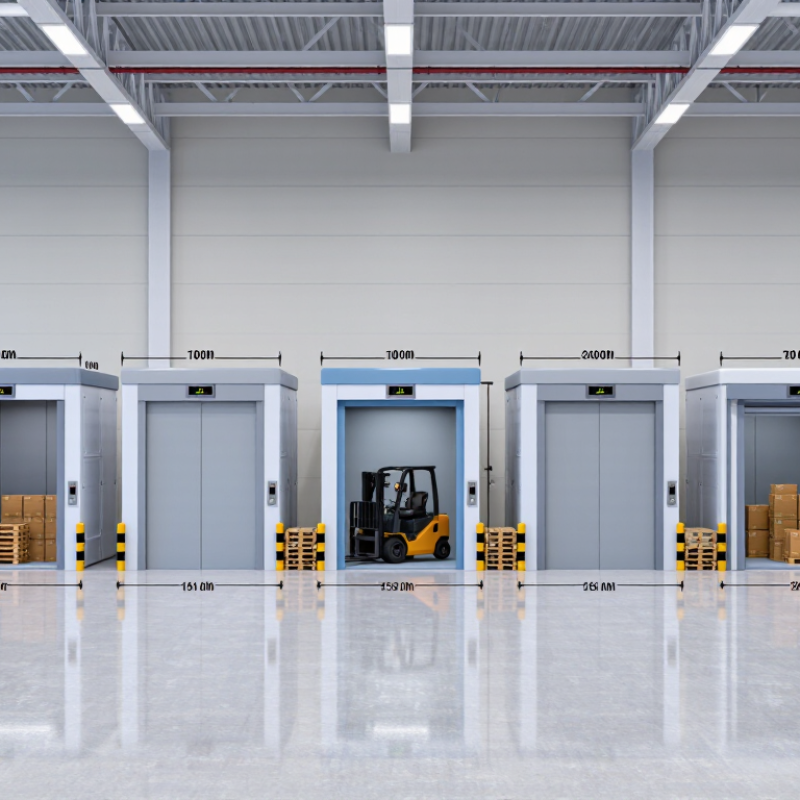
A standard freight lift is defined by its intended use and rated design, not by one universal weight limit. It carries goods in a lift car, with capacity, platform size, door opening, travel height, and loading method specified for the building. ASME A17.1/CSA B44, the North American Safety Code for Elevators and Escalators, distinguishes freight loading conditions through Classes A, B, and C, including heavy loading cases. These classifications describe how loads enter and sit in the car; they do not establish one maximum capacity for every freight lift.
That distinction matters. A pallet weighing 1,800 kilograms may fit the stated capacity, yet still overload one corner if the weight is poorly distributed. Check the rated-load plate, technical submittal, and floor-loading instructions together. A site survey should also confirm pallet dimensions, forklift or pallet-jack access, and whether goods move by hand or machine. Those details affect the lift specification as much as the headline capacity. I would not call a lift “standard” based on capacity alone; the term can hide important differences in duty cycle and loading practice. For procurement, document the heaviest single item and the heaviest combined load, then have a qualified lift professional verify the design against the applicable code and site conditions.
Freight lifts are selected by rated load, cargo dimensions, duty cycle, and building conditions. The capacities below are common planning examples, not a universal standard or a substitute for a site-specific design.
| Capacity Option | Rated Load | Approximate Metric Equivalent | Typical Cargo Examples | What to Check When Selecting |
|---|---|---|---|---|
| Compact-duty freight lift | 2,500 lb | 1,134 kg | Boxes, small carts, and light stockroom deliveries | Confirm the largest cart or pallet fits through the entrance and inside the car. |
| Light-duty freight lift | 4,000 lb | 1,814 kg | Retail inventory, appliances, and medium-sized material loads | Allow for the combined weight of cargo, pallets, carts, and handling equipment. |
| Standard-duty freight lift | 5,000 lb | 2,268 kg | General warehouse goods and palletized products | Check loading method, platform dimensions, door opening, and traffic frequency. |
| Medium-duty freight lift | 6,000 lb | 2,722 kg | Heavier pallets, production supplies, and workshop materials | Verify floor loading, car size, and whether loads are concentrated or evenly distributed. |
| Heavy-duty freight lift | 8,000 lb | 3,629 kg | Industrial components, dense materials, and larger pallet loads | Confirm structural support, equipment clearances, and the required duty rating. |
| High-capacity freight lift | 10,000 lb | 4,536 kg | Heavy machinery parts and multiple pallet loads | Assess shaft and pit requirements, power supply, loading access, and applicable codes. |
| Very high-capacity freight lift | 15,000 lb | 6,804 kg | Large industrial loads and specialized material-handling tasks | Usually requires project-specific engineering; confirm the full building and operational requirements. |
What defines a standard freight lift? It is a goods-handling lift rated for a specified maximum load, with a car and entrance sized for the intended cargo and handling equipment. The maximum weight is the lift’s marked rated load—not a recommended target to exceed. Actual available capacities, dimensions, and permitted uses vary by design, installation, and local safety requirements. Do not carry people in a goods-only lift unless it is specifically designed and approved for that use.
Its intended use and rated design define it, not one universal weight limit. Capacity, car size, door opening, travel height, and loading method all matter. “Standard” can be vague.
No. A 1,800-kilogram pallet may fit the rating but overload one corner if poorly positioned. Weight distribution matters.
Compare the rated-load plate, technical submittal, and floor-loading instructions. Measure the largest item, including its pallet or container. Small details count.
They describe how loads enter and sit inside the car. They do not set one maximum capacity for every lift.
Hydraulic lifts often serve low-rise buildings and heavy, slower loads. Traction lifts suit taller buildings and frequent trips. The route matters.
Vertical reciprocating conveyors move goods between fixed levels, often in factories. Scissor lifts serve shorter rises, such as a loading area to a raised floor. Short distances.
Machine-room-less designs can save space but still need suitable structural support. Inclined lifts follow a sloped route when a straight shaft will not fit.
Usually, it carries smaller items such as tools or boxed supplies, not full pallets. Check its dimensions and rated capacity.
Record the heaviest single item and combined load. Check pallet dimensions, door clearances, stopping levels, and forklift or pallet-jack access. A drawing may look roomy until carts arrive. Have a qualified lift professional verify the design for the site.
This guide explains what defines a standard freight lift and how it differs according to its design, loading method, travel height, and intended workplace. It introduces seven common types, from compact goods lifts for smaller loads to larger industrial systems, and describes the kinds of facilities and tasks each may suit. Rather than assuming every freight lift has the same limit, the article clarifies how rated capacity is measured and why the answer to “what is the maximum weight for a standard freight lift” depends on the lift’s specifications.
Maximum capacity is affected by factors such as platform size, structural design, drive system, installation conditions, and how weight is distributed on the platform. The guide also offers a practical approach to choosing a suitable capacity: estimate typical and peak loads, account for the dimensions and handling of goods, consider usage frequency and site requirements, and consult qualified lift professionals about the facility. This helps readers select a lift that fits their operation without relying on a single capacity figure for every application.
