Vanguard Lift
An indoor glass lift can transform a property’s movement, appearance, and perceived quality. But how does an indoor glass lift increase property value? The answer is not simply “because it looks luxurious.” It can improve accessibility, connect multiple floors, and create a memorable architectural feature. A transparent lift beside a staircase may turn an unused corner into a glowing focal point, especially when daylight passes through the shaft.
Property consultant Jonathan Rolande offers a useful principle: “Buyers pay for usefulness, not novelty.” That view matters here. A glass lift may support older residents, families, and people with limited mobility. It can also make a three-storey home feel easier to navigate. However, value does not rise automatically. The installation must appear safe, quiet, well finished, and properly integrated with the building. A visible control panel, poor lighting, or clumsy structural changes could weaken the impression.
This China Top 10 list examines indoor glass lifts through both design and investment perspectives. It considers cabin size, energy use, maintenance access, noise, safety systems, and visual integration. These details are easy to overlook. They should not be.
A premium lift may strengthen a property’s appeal, particularly in luxury urban markets. Yet the final return depends on location, buyer expectations, installation quality, and local property conditions. There is no universal percentage increase. That uncertainty deserves attention. The strongest choice is not always the most expensive model. It is the lift that feels natural, dependable, and genuinely useful every day.
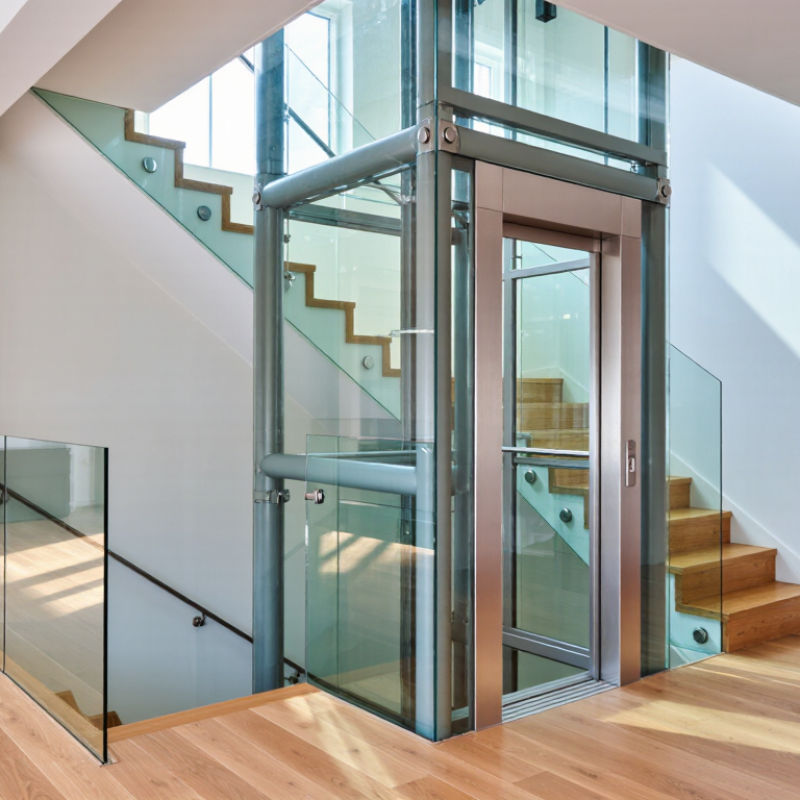
In China’s residential market, an indoor glass lift is more than a transparent cabin. It is a vertically integrated system installed within the building envelope. The lift usually includes a glazed shaft, a visible cabin, traction equipment, landing doors, lighting, ventilation, and emergency communication. It must also fit the fire strategy, structure, and circulation plan. A glass wall alone does not define it.
The China Elevator Association reported more than 10 million elevators in service nationwide by the end of 2023. That scale makes residential buyers more attentive to safety, maintenance, noise, and accessibility. In practice, a well-designed indoor glass lift should move quietly beside a stairwell or through a central atrium. Clear laminated glass, concealed drainage, anti-fingerprint finishes, and low-glare lighting matter every day. So does the service route. Technicians need safe access without damaging premium interior surfaces.
Chinese projects generally reference GB/T 7588.1 and GB/T 7588.2-2020, which align with modern international elevator safety principles. These standards do not turn glass into a value guarantee. Property value still depends on location, usable area, energy performance, and long-term maintenance. This is where marketing often becomes too confident. I have seen visually impressive installations that felt cold, reflective, and difficult to clean. Buyers should request structural calculations, fire documentation, acoustic data, maintenance records, and realistic renderings. The best indoor glass lift feels integrated, not added later.
Comparing China’s top ten indoor glass lifts requires more than checking polished photographs. Design quality begins with proportion, transparency, and how the lift fits the room. Slim glass panels can enlarge a narrow hallway, while warm metal finishes suit hotels and private residences. Clear sightlines matter. So does the entrance position, especially near stairs or busy reception areas.
Performance separates attractive cabins from dependable equipment. During a site assessment, I would check lifting capacity, travel speed, door movement, vibration, and stopping accuracy. Laminated safety glass improves protection and reduces visual distortion. A stable guide system should keep the cabin smooth when carrying several passengers. Noise is another practical test. A quiet motor feels far more refined at night.
Maintenance deserves equal attention. Accessible control cabinets, standard components, and clear fault records can reduce future delays. Emergency lowering and backup lighting should be tested, not merely listed in a brochure. Energy use also varies with traffic frequency and motor efficiency. I would not call any ranking absolute, because building structure and installation quality change results. Some elegant designs lose value when cleaning access is poor. The best comparison considers appearance, measurable performance, service support, and the lift’s daily behavior.
Which Features Make Indoor Glass Lifts Increase Property Value?
Indoor glass lifts can raise perceived property value when they solve practical problems, not merely add visual drama. Natural light, transparent walls, and slim shafts can make a narrow hallway feel larger. The design also improves movement between floors. The U.S. Census Bureau projects continued growth in the 65-and-over population, strengthening demand for accessible homes. A level cabin, clear controls, handrails, and smooth doors support older residents and wheelchair users.
Safety and operating quality decide whether the feature feels valuable. EN 81-20 and EN 81-50 provide widely recognised safety requirements for lift design and testing. Laminated safety glass, obstruction sensors, emergency lowering, and backup lighting can reduce buyer anxiety. The U.S. Department of Energy’s Better Buildings program estimates that elevators and escalators may consume 2% to 10% of commercial building electricity. Efficient LEDs, standby controls, and regenerative drives can therefore protect running costs.
Comfort is often overlooked. Low noise, stable temperature, and limited vibration make the lift feel more luxurious. Maintenance access matters. A beautiful lift that stops frequently can damage trust quickly. RICS valuation guidance supports evidence-based assessment, but it does not promise a universal price premium for glass lifts. Location, installation quality, approvals, and service records still influence the final valuation. The glass can look impressive. Poor detailing cannot.
Which features make indoor glass lifts more attractive to property buyers?
This normalized benchmark compares the relative property-value appeal of key indoor glass lift features on a 0–100 index. Accessibility, panoramic visibility, safety systems, quiet operation, and energy efficiency are typically the strongest value drivers because they improve usability, comfort, and the overall architectural experience. The index is a comparative planning tool rather than a guaranteed percentage increase in property price.
China’s top indoor glass lifts should be judged by engineering evidence, not appearance alone. A transparent shaft can increase perceived space, but it also exposes door alignment, dust, vibration, and lighting defects. The 2024 Global Elevator and Escalator Market report by Fortune Business Insights identifies safety upgrades and modernization as key market drivers. That trend matters for property value. Buyers usually trust documented performance more than polished finishes.
Ask the installer to design around EN 81-20 and EN 81-50, or the applicable ASME A17.1/CSA B44 requirements. These standards address passenger protection, testing, emergency systems, and structural calculations. Request load tests, fire-rating documents, electrical diagrams, and third-party inspection records. Installation should include a level landing, guarded moving parts, drainage control, and an emergency lowering plan. Maintenance contracts must define inspection frequency, response time, spare-part availability, and software access. The International Energy Agency’s 2023 Buildings report states that buildings consume about 30% of global final energy, so efficient standby lighting and drive systems deserve attention.
Tips: Visit an operating installation before purchase. Listen for door impact. Check the glass edges in daylight. Ask who receives emergency calls at 2 a.m. A maintenance log is more useful than a glossy brochure. However, compliance labels alone cannot prove good workmanship; this is where many evaluations become too optimistic. Have an independent elevator engineer review the quotation, local permits, and inspection schedule before construction begins. Some elegant designs remain difficult to clean, service, or evacuate safely. That weakness can quietly reduce long-term property value.
Choosing an indoor glass lift should begin with the property’s layout, not its appearance. A high-value home needs quiet movement, stable operation, and clean architectural integration. During site reviews, measure the shaft area, floor heights, landing positions, and available electrical capacity. A lift that looks elegant may still feel wrong if it blocks natural light or narrows a hallway. Keep it practical.
Select laminated safety glass, durable metalwork, and lighting that avoids harsh reflections. Transparent walls can make a compact lift feel more spacious, but fingerprints become visible quickly. I once underestimated cleaning access on a similar design. That small mistake affected daily comfort. Ask about ventilation, emergency lowering, door sensors, and backup power before approving the layout.
Reliable performance matters more than dramatic decoration. Request load testing records, installation credentials, maintenance schedules, and clear warranty terms. An experienced engineer should confirm structural strength and local safety compliance. Review the service response process, not only the showroom finish. If replacement parts require long delays, luxury can become frustration. Consider noise levels near bedrooms, vibration beside glass panels, and wheelchair access at every landing. Warm lighting, precise alignment, and matching handrails can raise perceived value without excessive ornament.
It is a complete vertical transport system inside a building. It includes a glazed shaft, cabin, landing doors, lighting, ventilation, and emergency communication. A glass wall alone is not enough. It must also fit the structure, fire plan, and circulation layout.
It can improve perceived value when it solves practical problems. Transparent walls may make a narrow hallway feel wider. Smooth movement can improve access between floors. However, location, usable space, energy performance, and maintenance remain more important. The price benefit is not guaranteed.
A level cabin reduces tripping risks. Clear controls, handrails, and smooth doors also help. The cabin should provide enough turning space for mobility devices. Lighting must remain bright without harsh reflections. Small details matter.
Request structural calculations, fire documents, electrical diagrams, and inspection records. Load-test results are also useful. Ask about obstruction sensors and emergency lowering. Confirm that moving parts are properly guarded. A glossy brochure proves very little.
Inspect the glass edges in daylight. Look for chips, uneven joints, fingerprints, and excessive reflections. Laminated safety glass can improve protection after impact. Check whether the cabin vibrates during travel. Listen closely. A beautiful surface may still feel cold or poorly finished.
The contract should state inspection frequency and emergency response times. It should also explain spare-part availability and software access. Technicians need a safe service route. They should not damage premium walls or flooring. Ask who receives emergency calls at two in the morning.
Yes, if the equipment and interior details are designed carefully. Low-noise drives, stable doors, and controlled ventilation improve comfort. Efficient lighting and standby controls can reduce energy use. Regenerative systems may also lower operating demand. Actual performance needs measurement.
Visit a working installation before signing. Watch the doors close and check the landing level. Review local permits and the inspection schedule. Have an independent lift engineer examine the quotation. I may be too optimistic, but independent review catches expensive omissions. Design elegance is not proof of good workmanship.
China’s indoor glass lift market is increasingly shaped by the demand for elegant, space-efficient, and technically reliable home mobility solutions. This article examines what defines an indoor glass lift in residential properties, comparing leading design approaches, performance factors, cabin layouts, visibility, noise control, energy use, and adaptability to different architectural styles. It also explains how does an indoor glass lift increase property value by improving accessibility, creating a strong visual feature, supporting modern interior design, and making a home more attractive to future buyers.
Beyond appearance, the guide focuses on practical decision-making. It outlines how to assess safety systems, structural requirements, installation conditions, maintenance planning, warranty support, and relevant compliance responsibilities. By balancing design quality with dependable operation, long-term serviceability, and suitability for the building, homeowners can select an indoor glass lift that enhances both daily comfort and the property’s perceived value.
